
Popular games



Related games





Published on: November 2026
Game technology: HTML5
Platforms: PC, Phone, Tablet
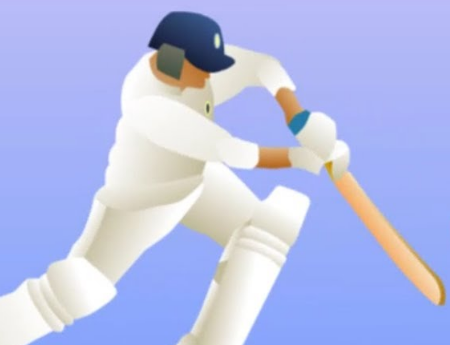
A cricket bat responds directly to the player’s movements rather than following fixed animations in Little Master Cricket. Created by Bennett Foddy, the game uses physics-based interactions to reproduce the relationship between batting technique, ball movement, and scoring opportunities. Players control an unusually flexible batter whose movements are influenced by ragdoll physics. The objective is to accumulate runs while avoiding dismissal. Unlike comprehensive cricket simulations, the experience does not involve managing an entire team or organizing bowling strategies. Instead, every delivery presents another opportunity to demonstrate control over the bat.
Physics-Based Cricket Gameplay
Moving the mouse changes the position and movement of the cricket bat. Players can perform defensive blocks, controlled strokes, or more aggressive swinging movements. The outcome depends on how the bat makes contact with the incoming delivery. Striking the ball at different angles can send it toward separate sections of the playing area.
The flexible character movement makes accurate batting more demanding than simply pressing a button at the correct moment. Players must become familiar with how changes in direction influence the position of the bat and its subsequent contact with the ball.
Scoring Zones and Batting Decisions
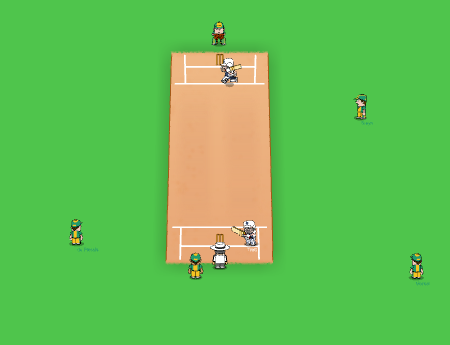
Different sections surrounding the playing field represent scoring opportunities and dismissal risks. Understanding these areas is essential for developing an effective batting strategy.
The principal mechanics include:
- Direct control of the cricket bat.
- Ragdoll-based character movement.
- Incoming deliveries with different trajectories.
- Striped areas providing scoring opportunities.
- Numbered zones associated with runs.
- Black-and-yellow areas representing catches.
- Wicket protection during difficult deliveries.
- Defensive and aggressive batting techniques.
Players must decide whether to concentrate on remaining active or attempt more ambitious strokes. Hitting a ball toward a valuable scoring zone may produce a strong result, but an uncontrolled movement can send it into an area where the batter is caught out. Defensive batting provides greater consistency, although scoring too slowly can limit overall performance.
Developing a High-Scoring Innings
Little Master Cricket encourages players to balance survival with an effective scoring rate. Reaching a century represents a recognizable personal achievement, but there is no mandatory tournament structure requiring players to follow a fixed sequence of matches. Each session provides another opportunity to experiment with batting techniques.
Learning to control smaller movements can be particularly useful when deliveries are difficult to approach. Players can gradually develop their own batting style, deciding when to defend the wicket and when to attempt more rewarding strokes.